
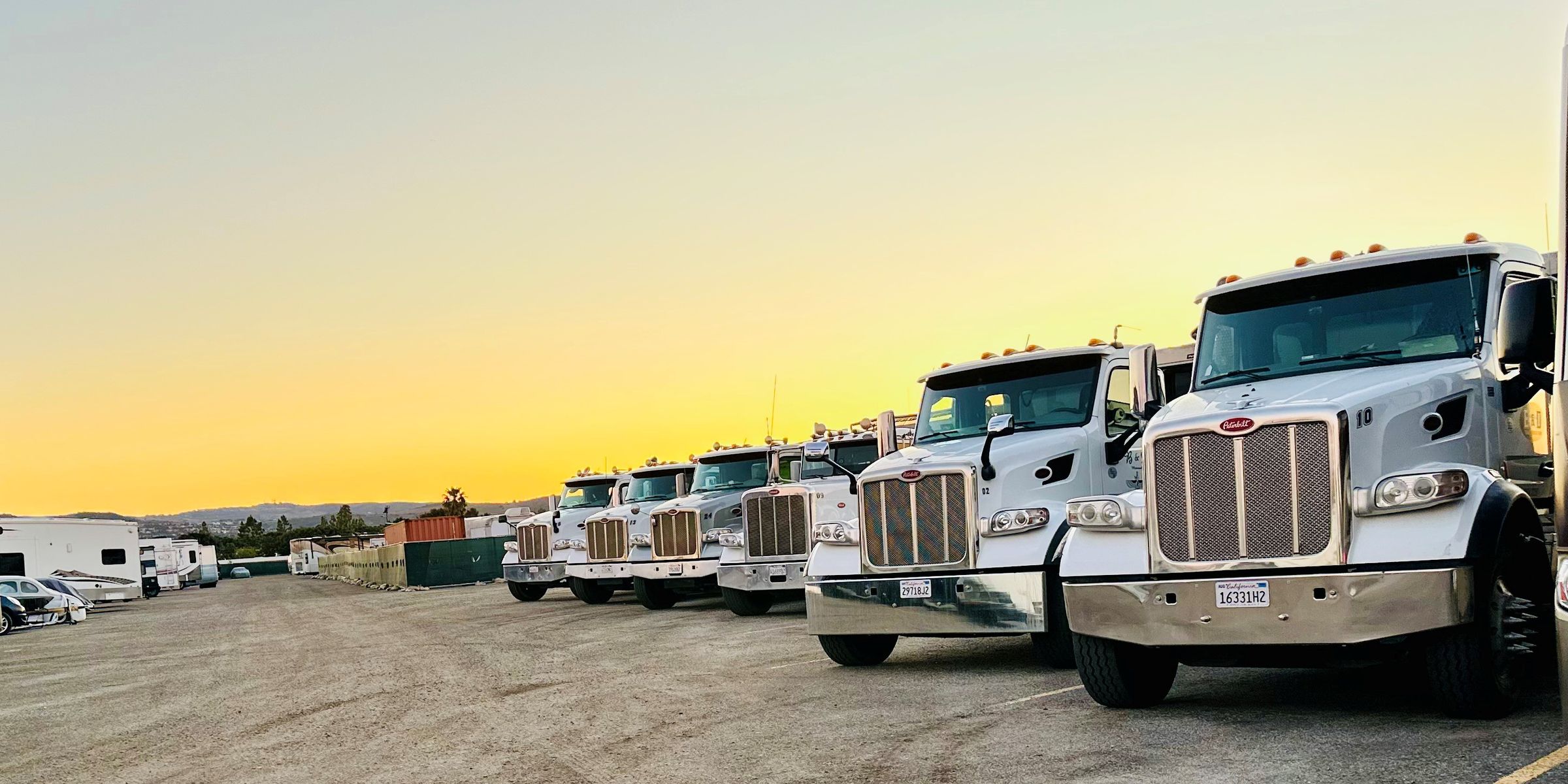
Choosing the Right Dump Truck
The right dump truck is the one that carries the most legal tons per trip and fits your site. Pick a truck that is too big and it spends the day maneuvering; pick one that is too small and you pay for extra trips. This guide compares the trucks B&D Transportation runs every day on Southern California paving and grading jobs.
Dump Truck Comparison Chart
| Truck | Typical payload* | How it unloads | Best for | Site needs |
|---|---|---|---|---|
| Bottom dump | Up to 20+ tons | Gates in the trailer floor, windrow while moving | Dirt, base, sand and gravel in volume over distance | Firm, open ground with room to drive through |
| Strong arm / super dump | Up to 20+ tons | End dump (box raises) | Asphalt, grindings, base, dirt | Moderate; backs in like a single truck |
| Super tag | Up to 20 tons | End dump, longer box | Asphalt and grindings, fast cycles | Moderate; longer overall length |
| Super 10 | 15–18 tons | End dump | Tight sites, residential, urban work zones | Smallest footprint, tightest turns |
| Extended box end dump | Varies by material | End dump, extra cubic capacity | Light, bulky loads like grindings and loose dirt | Moderate |
*Typical figures for B&D’s fleet. Exact payload depends on axle, wheel and tire configuration, the material and California weight limits.
Tons vs. Cubic Yards: Weigh Out or Cube Out
Every dump truck has two limits: the legal weight it can carry and the volume its box can hold. Which one you hit first depends on the material.
- Heavy materials weigh out. Aggregate base, gravel, sand, wet clay and rocky dirt reach the legal weight limit before the box is full. For these, the axle configuration matters most — trucks with a trailing or tag axle carry more legal tons.
- Light materials cube out. Asphalt grindings and loose, dry dirt fill the box before reaching the weight limit. For these, a bigger or extended box carries more per trip.
That is why hauling is usually quoted and tracked in tons, and why the same truck carries a different number of cubic yards of base than of grindings.
California Weight Limits in Plain English
California and federal rules cap a truck’s gross weight and the weight on each axle, and the bridge formula rewards spreading weight over more axles and a longer wheelbase. That is the whole idea behind super dumps, super tags and super 10s: added axles let one truck legally carry more. Overloading isn’t a shortcut — overweight loads mean fines, damaged roads and trucks pulled out of service. A professional hauler loads to the legal limit, not past it.
Choosing by Material
- Hot mix asphalt: super dumps and super tags; super 10s on tight streets.
- Asphalt grindings / RAP: extended-box end dumps, super dumps and super tags.
- Dirt import and export: bottom dumps for volume and distance; end dumps and super 10s for tight sites.
- Aggregate base, gravel and sand: bottom dumps for windrows; super dumps and super 10s for piles and tight access.
How Many Trucks Do You Need?
Use this quick formula: trucks needed = round-trip time ÷ time to load (or lay out) one truck. If a round trip takes 60 minutes and your loader, mill or paver handles a truck every 10 minutes, plan on six trucks, plus one for traffic. Send us the numbers and our dispatch team will check them with you — that is part of every quote.
Dump Truck Size FAQ
How many tons does a dump truck hold?
It depends on the configuration. In B&D’s fleet, super 10s typically carry 15–18 tons, super tags up to 20 tons, and strong arm super dumps and bottom dumps up to about 20+ tons, subject to California weight limits.
What is the difference between a bottom dump and an end dump?
An end dump raises its box and dumps out the back, so it can place a pile and back into tight spots. A bottom dump opens gates in its trailer floor and unloads in a windrow while moving, which is faster for high-volume material on open ground.
What is the difference between a super 10 and a super dump?
Both are single-unit dump trucks with extra axles. A super dump (strong arm) uses a trailing booster axle to carry more tons; a super 10 is more compact and maneuverable, carrying 15–18 tons.
Why are dump truck loads measured in tons?
Because trucks are limited by legal weight, and most construction materials reach that weight before the box is full. Tons also match how quarries and plants sell and scale material.
Which dump truck should I hire for my job?
Tell us the material, quantity, distance and site access, and we will recommend the truck. Call (949) 324-6219 or request a quote.
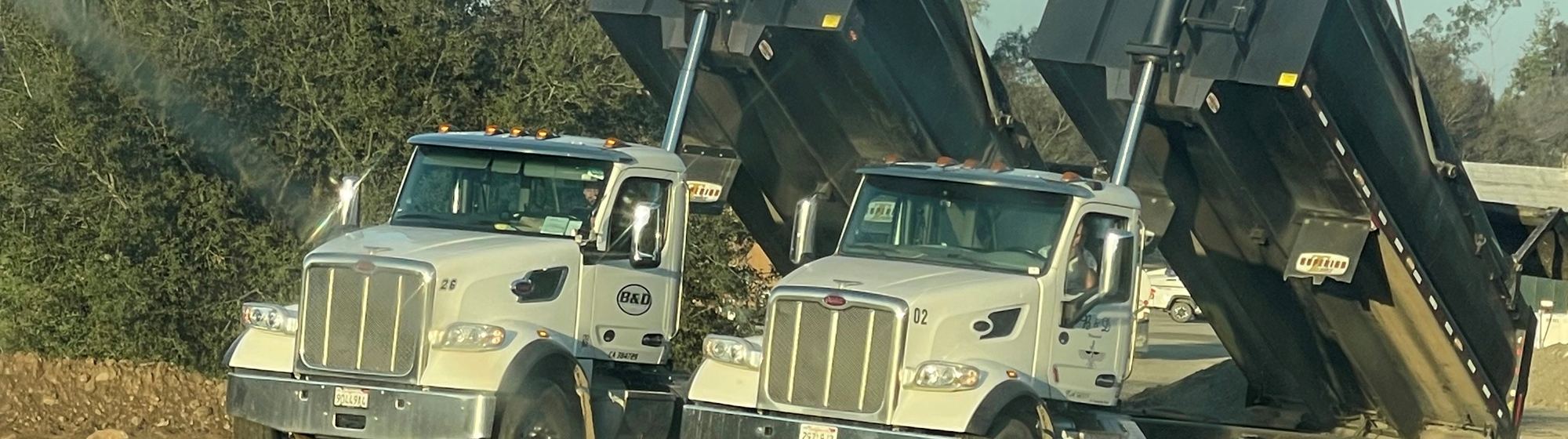
Still Not Sure Which Truck You Need?
Call dispatch — we’ll match the truck to the material and the site.